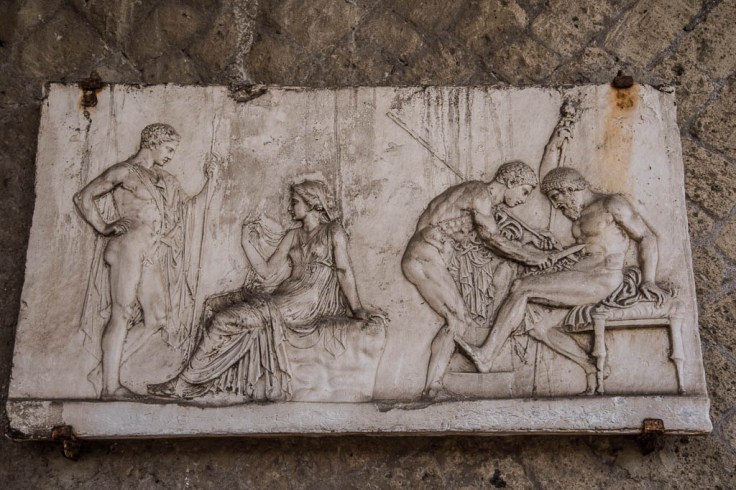
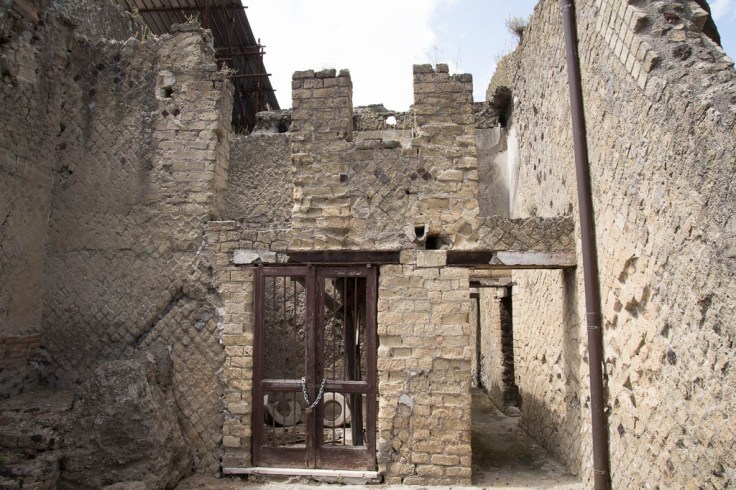
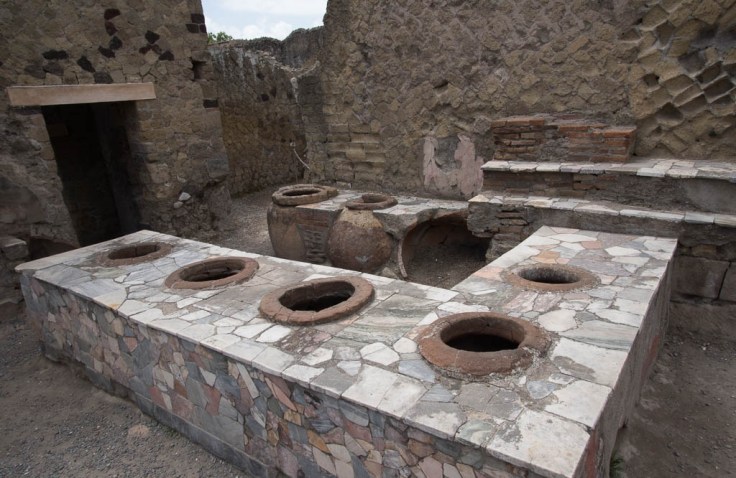
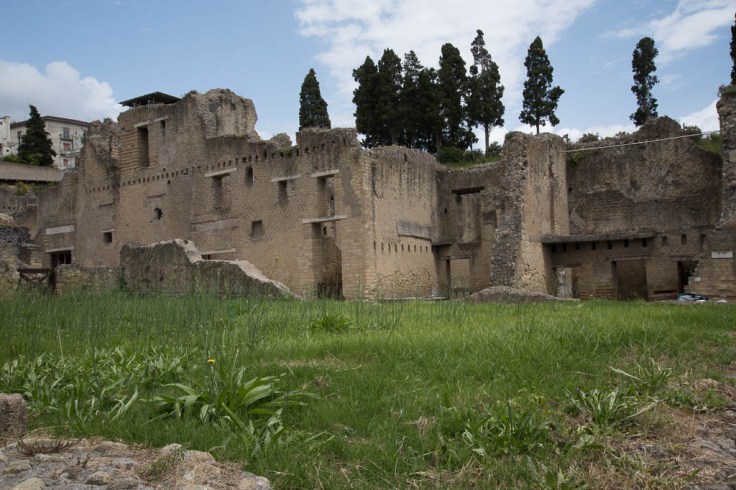
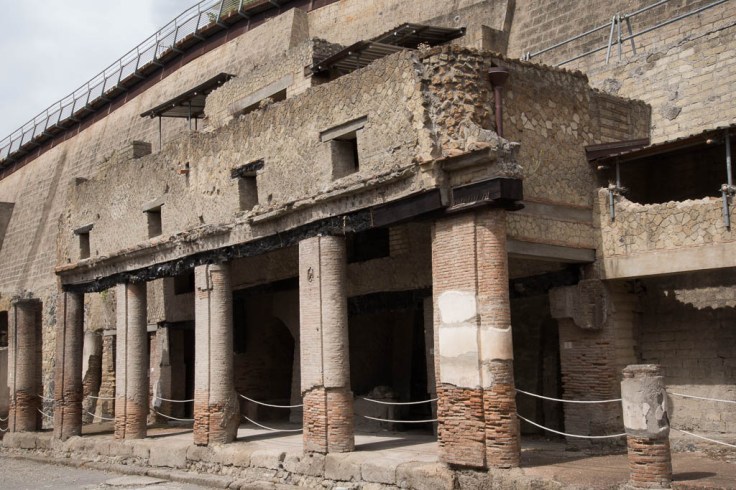
When we think of the town covered in lava from Mt. Vesuvius in A.D. 79 we typically think about Pompeii. But there was another town also covered by lava call Herculaneum. It turns out that Herculaneum was covered differently than Pompeii which resulted from less damage to the structure of the town. In fact you can see in some of the pictures original timbers that survived (although charred).
The first pyroclastic surge, formed by a mixture of ash and hot gases, billowed through the mostly evacuated town of Herculaneum at 160 km/h (100 mph). A succession of six flows and surges buried the city’s buildings, causing little damage and preserving structures, objects and victims almost intact. -wikipedia
Herculaneum was a wealthy town of about 4,000 people with large houses, a gymnasium, and it was built right on the beach.
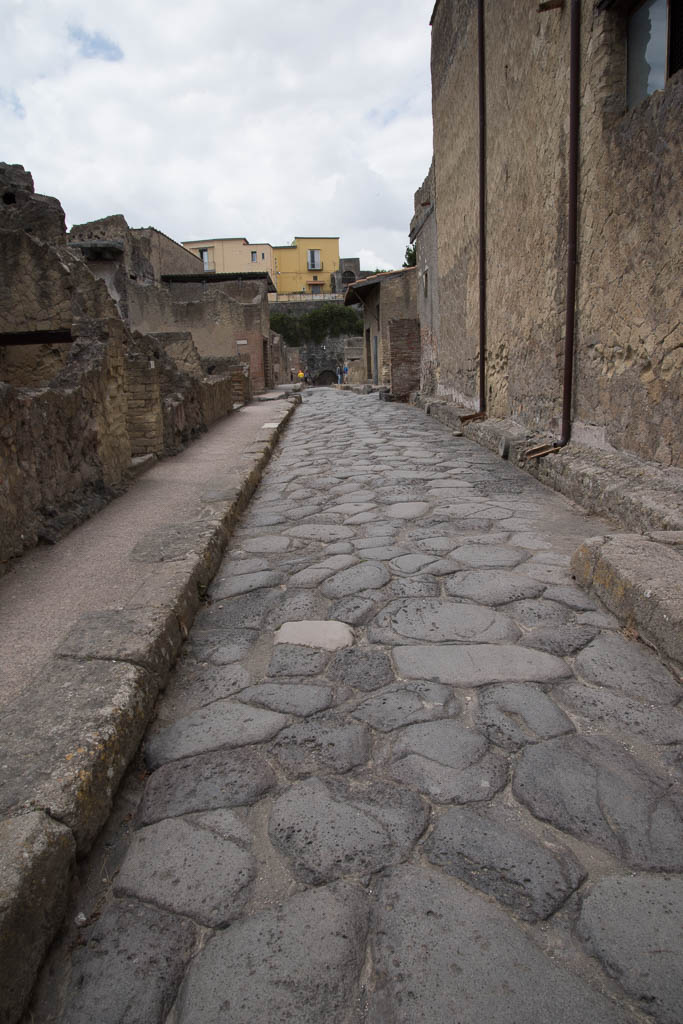
Today it sits lower than the rest of the town because of the lava flow. Much of Herculaneum has not been excavated and is still under the new town which was built on top of it.
It was surreal to imagine people walking about, the smells of a town, charcoal smoke in the air and the noise of children.








 On the Greisen Side of Life
Loves seeing your pictures. It seems you have had a wonderful time. What a wonderful gift to yourselves!!!